
For landlords & rental investors
Know which door is bleeding
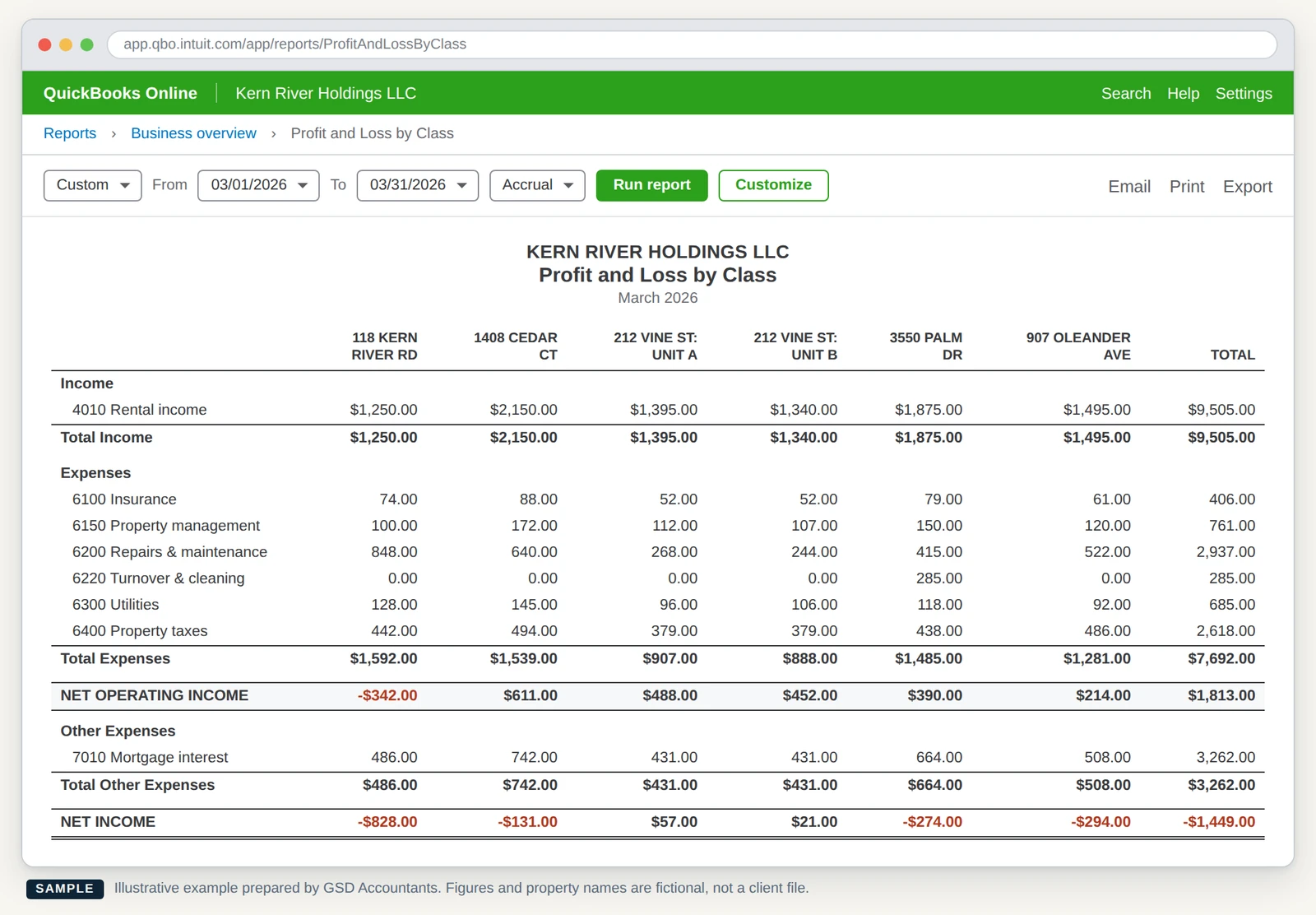
One blended P&L across twelve doors tells you nothing. We close a per-property P&L every month, rent down through debt service, so you’re managing a portfolio instead of guessing at one.
Net operating income by door
6 of 12 shown| 1408 Cedar Ct | $611 |
|---|---|
| 212 Vine St, Unit A | $488 |
| 212 Vine St, Unit B | $452 |
| 3550 Palm Dr | $390 |
| 907 Oleander Ave | $214 |
| 118 Kern River Rd | −$342 ⚠ |
| Portfolio NOI | $4,105 |
Sound familiar?
- Weekends spent categorizing transactions. Half end up wrong anyway
- Security deposits mixed into operating cash (and spent)
- Your LLCs owe each other money and nobody knows how much
- Every refi starts with two weeks of cleanup before the bank sees a number
- CapEx and repairs classified by vibes
How we run rental books
- Per-property P&L monthly via QBO class tracking
- Every account reconciled (bank, cards, loans, escrow), with mortgage balances tied to the statements
- Security deposit liabilities kept separate from operating cash
- CapEx vs. repairs applied consistently, with judgment calls flagged for your CPA
- Inter-entity due-to/due-from reconciled monthly
- A lender-ready package in 48 hours, so a refi stops starting with a rebuild
Rental bookkeeping questions
What does “per-property P&L” actually mean?
Every transaction is tagged to its property using QBO class tracking, so you get a real profit and loss statement for each door: rent, repairs, CapEx, and debt service, instead of one blended number.
How do you handle security deposits?
Deposits are liabilities, not income. We track them separately from operating cash so you never spend money that isn’t yours, and never book it as revenue.
CapEx vs. repairs. Why does it matter?
Repairs hit this year’s P&L. Capital improvements go on the balance sheet and depreciate. Get it wrong and your returns are distorted and your CPA inherits the mess. We apply the distinction consistently and flag judgment calls for your CPA’s direction.
I have multiple LLCs that pay each other’s bills. Problem?
Common, and fixable. We reconcile inter-entity due-to/due-from balances every month so each LLC’s books stand on their own. That’s what a lender wants to see at refi.
8 doors or 80. There’s a published tier for it.
Self-managing investors fit Clean Books ($1,247/mo, one entity included). Operators with staff and volume fit Back Office ($2,997/mo). The diagnostic confirms which.
Book a 30-minute diagnostic